• Skip to main content
Logo_w_Tagline_RK_Mortar
  • Home
  • About Us
  • Product
  • Contact Us
  • Home
  • About Us
  • Product
  • Contact Us
  • ID
  • EN
Calculator

Uncategorized

What You Should Know About AAC Block

August 28, 2021 by Admin Crea RK Mortar Leave a Comment

HISTORY

Developed in the 1920s in Sweden by Dr. Johan Axel Eriksson and Prof. Henrik Kreüger; the formula was refined in the 1970s.

CHARACTERISTICS

  1. Lighter Weight — red brick 2,000 kg/m³, AAC block 600 kg/m³.
  2. More Environmentally Friendly — reduces waste by 30%, emissions by up to 50%.
  3. Heat Resistant — porous material aids cooling and fire resistance.
  4. Long-Lasting — doesn’t degrade under normal weather.
  5. Consistent Sizing — factory standardized, commonly 60x20x7.5 cm.

What to Consider

  1. Quantity Needed — measure and calculate requirements first.
  2. Bonding Pattern — proper bond to strengthen the wall.
  3. Using the Right Mortar — use a notched trowel (RK-201) for consistent, efficient results and to prevent popping.

Filed Under: Uncategorized

Exposed Cement Walls: A Growing Design Trend

August 27, 2021 by Admin Crea RK Mortar Leave a Comment

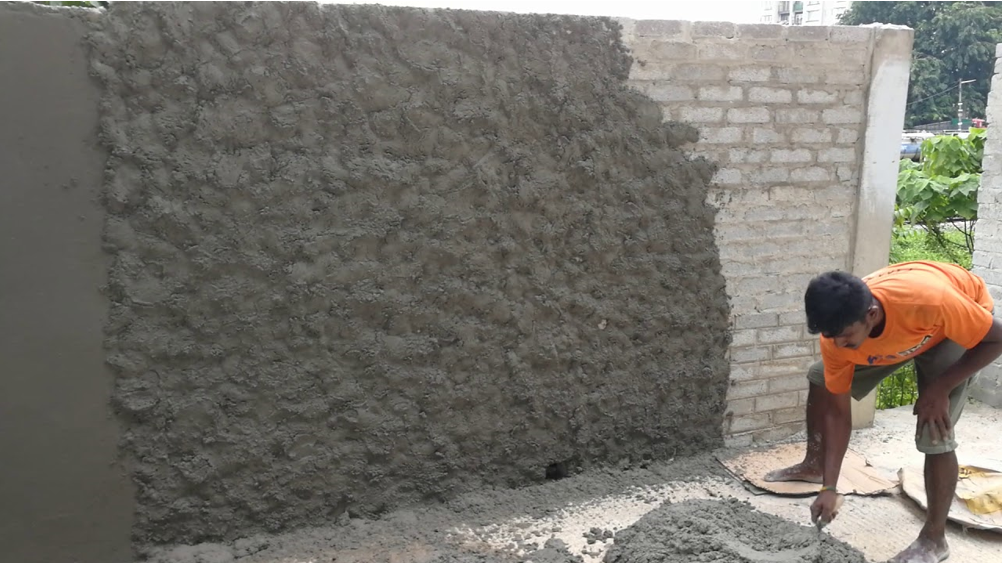
Unfinished material is increasingly popular for its lower cost and natural aesthetic — suited for both indoor and outdoor use.
1. Kamprot (Rough) Technique — throwing/spraying cement; rough texture (manual) or smooth (concrete spraying).
2. Skim-Coat (Acian) Technique — smooth, sleek finish; watch for hairline cracks, wet the brick first, wait 2 weeks before skim coating.
3. Scratch (Garuk) Technique — creates patterns (horizontal, vertical, wave-like) using specific tools.

Filed Under: Uncategorized

How to Calculate Building Materials

May 3, 2021 by Admin Crea RK Mortar Leave a Comment

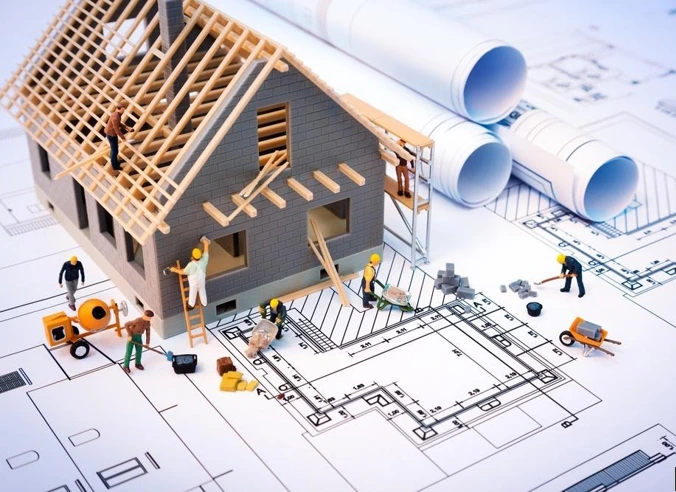
RK Mortar_Cara Hitung Bahan Bangunan_detail 1

Even if you’re using a contractor, it doesn’t hurt to calculate your own building material costs. To avoid overspending when building or renovating, it helps to know exactly what materials you’ll need. Before heading to the building supply store, it’s worth considering the types of materials you’ll use and weighing your budget against current building material prices — referencing 2018–2019 material price lists as a benchmark. Also pay attention to how to calculate building materials per square meter, to avoid running short or over budget mid-project. Here’s how to calculate building materials.


1. Know the Types of Building Materials and Their Uses

There are many types of building materials used in home construction. Check the list below and determine which ones you’ll need.

  • Foundation stone. Needed to build the building’s foundation. You can use river stone, mountain stone, or brick.
  • Cement. Cement plays a crucial role throughout construction — from bonding the foundation stone, to joining bricks for walls, to plastering walls, to creating exposed cement flooring.
  • Sand. Combined with cement and water, sand forms the mixture used to bond stone and brick, forming sturdy walls and columns.
  • Steel. Used as reinforcement to strengthen walls.
  • Wood and bamboo. Wood is used for construction as well as flooring, walls, frames, and stairs. Bamboo is also used throughout the construction process.
  • Gravel / crushed stone (split). Typically mixed with cement and sand to make concrete.
  • Clay brick / concrete block / AAC block. Brick is an inseparable part of construction. Its cool, sturdy nature makes it a popular choice. To save cost, brick is often replaced with concrete block, which is more affordable but not as strong and tends to retain more heat. AAC block (“hebel”) has become increasingly popular with consumers.
  • Roof tiles. Clay roof tiles are arguably the most popular option in Indonesia. Alternatives include lightweight asbestos and metal roofing, though these conduct heat faster into the home. There are also roof tiles made from plastic, recycled rubber, and cellulose fiber, which are more eco-friendly and relatively safer during earthquakes. Other options include asphalt shingles, ceramic roof tiles, and wood shakes.
  • Ceramic tile. Flooring, bathroom walls, and kitchens all require different types of tile. Beyond material, today’s designs also come in a much wider variety.

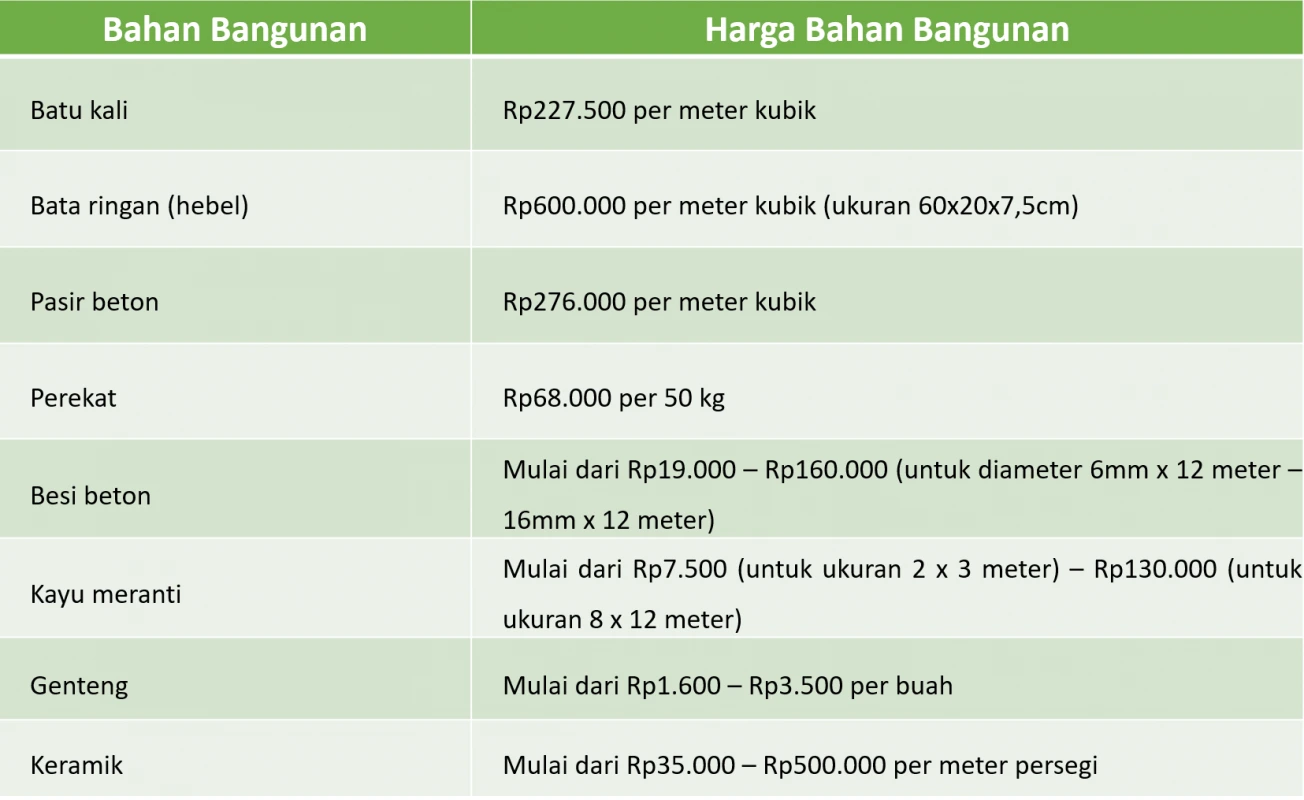
2. Know Building Material Prices

Quality building materials result in a sturdier, more durable structure. Think of it as an investment in your future — it requires a larger upfront cost, but saves you money down the road on maintenance and durability.

RK Mortar_Cara Hitung Bahan Bangunan_detail 2


Calculate the Area to Be Built and the Materials Needed

RK Mortar_Cara Hitung Bahan Bangunan_detail 3

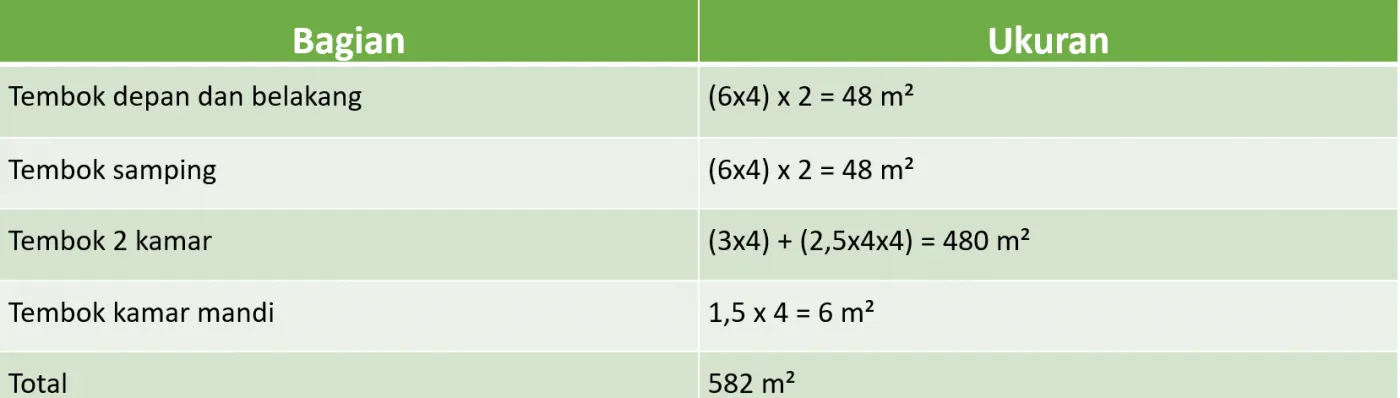
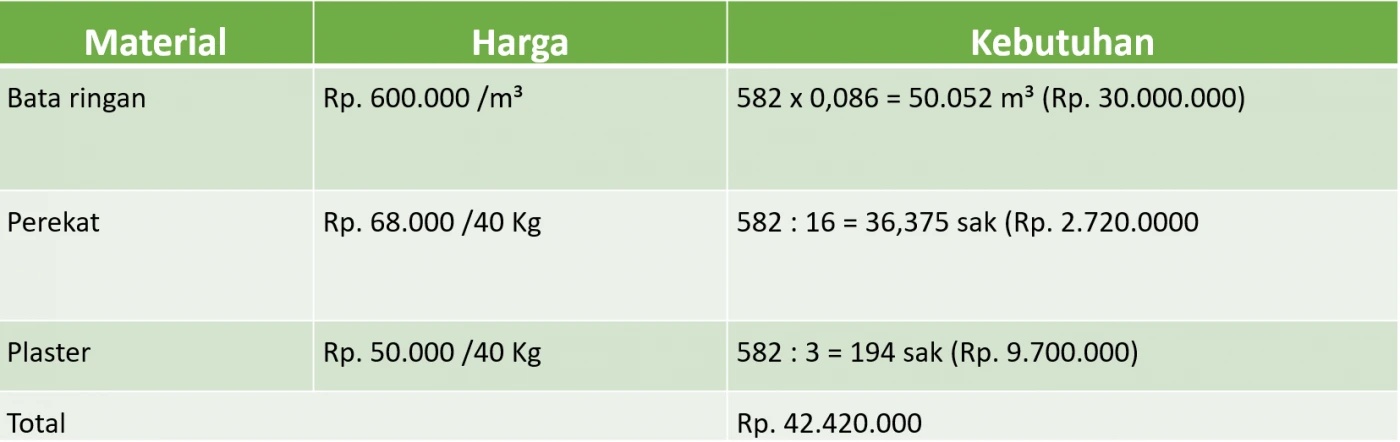
The first step is to calculate the area to be built, then multiply that by the amount of material required.

Example: a Type 36 house

RK Mortar_Cara Hitung Bahan Bangunan_detail 4

RK Mortar_Cara Hitung Bahan Bangunan_detail 5

Calculate Labor Costs (Construction Workers)

RK Mortar_Cara Hitung Bahan Bangunan_detail 6

If you’re preparing to build a house, you’ve probably wondered how much you’ll need to pay your construction workers. Worker wages are typically structured in two ways: daily wages or contract (borongan) wages. Under the daily wage system, each worker is paid at the end of each working day. Under the contract system, an agreement is reached in advance for a total wage covering the full number of working days — or it can be calculated based on the prevailing per-square-meter labor rate in a given area.

Beyond how to calculate building materials, choosing between contract and daily wages is really just a matter of agreement between you and your chosen workers — both systems work similarly, though a contract system may make managing your workforce easier.

Factors That Affect Construction Labor Costs:

  1. Construction location. Rates vary by region — city versus rural areas will differ.
  2. Complexity of the build. More complex designs take more time to build. Different designs mean different scopes and levels of difficulty.
  3. Type of work involved. The number of work items depends on the design. Each work item is priced differently — more high-cost items mean a higher total price.
  4. Skill level of the workers. Skill level affects speed and quality of work, which in turn affects the total number of days and daily wage costs (if using the daily wage system).


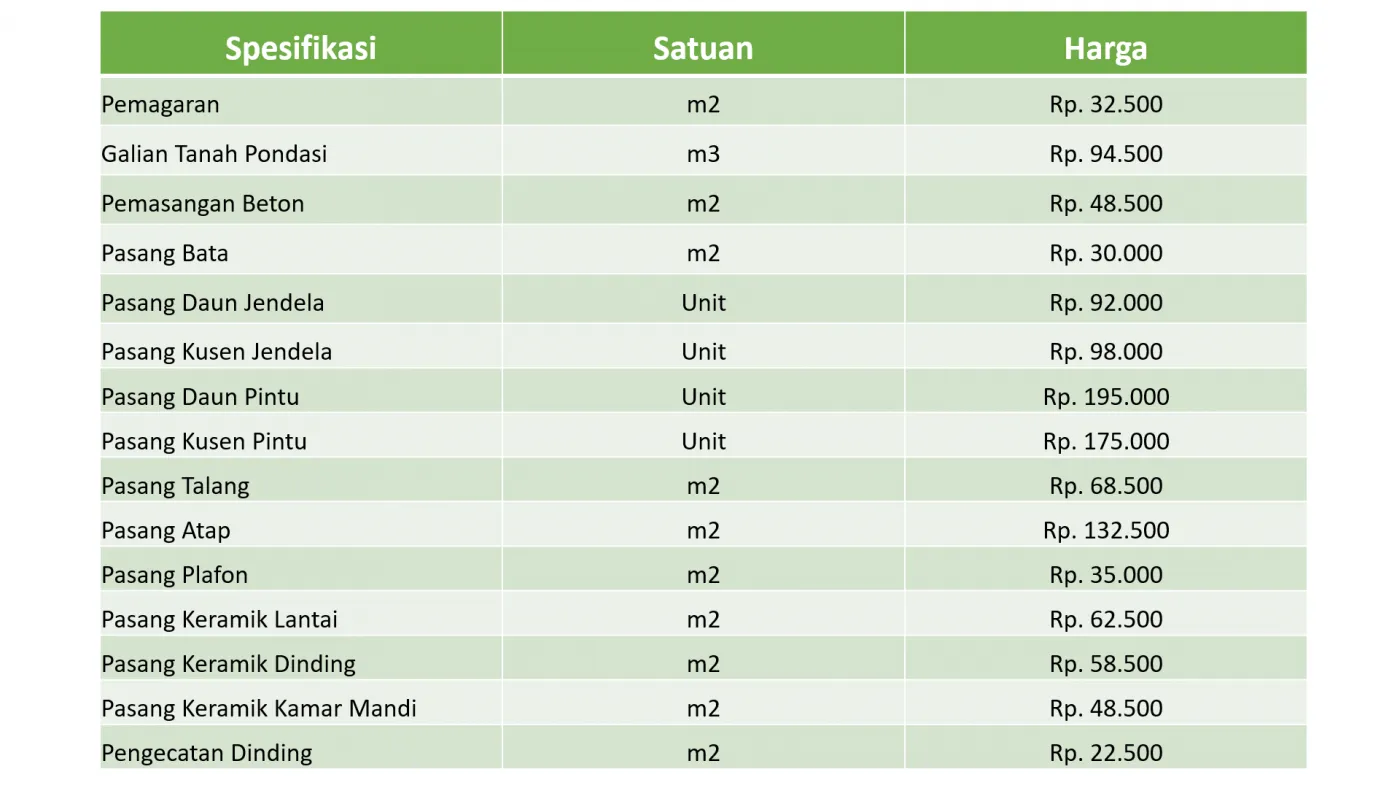
Here is a reference for construction worker wages per square meter:

RK Mortar_Cara Hitung Bahan Bangunan_detail 7

Example calculation using contract wages per m²:

The labor cost is calculated based on the total square meter area of a building. For example, if the labor cost is IDR 800,000/m² for a residential building.

The simple formula is: BBU = HB × LB

BBU (Biaya Upah Borongan) = Total Contract Labor Cost
HB (Harga Borongan) = Contract Labor Rate
LB (Luas Bangunan) = Building Area


Example:

  • House area = 6m x 6m = 36 m²
  • Contract labor rate per m² = Rp. 800,000
  • Contract labor cost (BUB) = 36 m² x Rp. 800,000 = Rp. 28,800,000


This typically covers foundation work, brick wall installation and plastering, roof framing and covering, finishing work, and all other agreed-upon work items.

With this overview of how to calculate building materials, we hope you’ll be better equipped to choose the right materials for your build and negotiate favorable labor rates with your construction workers.

Filed Under: Uncategorized

The Difference Between Skim Coating (Acian) and Plastering (Plesteran)

April 30, 2021 by Admin Crea RK Mortar Leave a Comment

Want smooth, sturdy walls? Pay attention to your skim coat and plaster. But do you know the difference between the two? And how do you apply each one correctly?

“Acian” (skim coat) and “plesteran” (plaster) are familiar terms in building construction. Yet many of us don’t fully understand what each one actually means.

Plastering and skim coating are both part of wall-finishing work. They serve as protective coating layers that shield the wall from water seepage and weather, while making the wall smooth and sturdy. However, acian and plesteran differ as follows:

RK Mortar_Perbedaan Acian dan Plesteran_detail 1


PLASTERING (Plesteran)

Plastering is part of the wall-finishing process, used to cover brick, concrete block, or AAC block and concrete surfaces, making them look neat, smooth, and even. Recommended plaster thickness is between 1.5 cm and 3.5 cm. Plastering gives the best results when the underlying brickwork is also laid neatly — neat brickwork can even help save on skim-coat material.

RK Mortar_Perbedaan Acian dan Plesteran_detail 2


SKIM COATING (Acian)

Skim coating is part of the wall-finishing process that follows plastering, used to close surface pores and smooth out the plaster layer. The material used differs from plaster as well — skim coat uses only a mixture of cement and water, without sand. Recommended skim-coat thickness is between 1 mm and 3 mm.

To avoid cracking in the skim coat, it should only be applied once the plaster has fully dried and stopped shrinking — roughly 2–3 weeks for interior walls, and around 2 weeks for exterior walls.

Now you know the difference between skim coating and plastering — apply this knowledge, and your walls are sure to come out smooth and sturdy. Stay tuned for more informative posts from us.

Filed Under: Uncategorized

Types of Ceramic Floor Tiles

April 30, 2021 by Admin Crea RK Mortar Leave a Comment

• Standard Ceramic Tile — common, sized 30–80 cm².
• Terrazzo Ceramic Tile — fragmented-stone pattern, made from reprocessed marble waste, scratch-resistant.
• Natural Granite Tile — luxurious, for living rooms/bedrooms/guest rooms/restaurants.
• Homogeneous Tile — strong, large format (40×40 up to 100×100 cm), for bathroom walls/mall or office floors.
• Square Ceramic Tile — unglazed clay tile, for terraces.
• Mosaic Tile — small (≤6 cm), for bathrooms/kitchens, water-resistant.
• Paver Tile — thick clay material, for pool edges/terraces, rough non-slip surface.
• Marble Tile — luxurious, expensive, needs regular maintenance and polishing.
• Cement Tile — strong load-bearing, for warehouses, relatively affordable.
• Porcelain Tile — glossy, clear, varied colors, cracks easily in extreme temperatures, hard to cut.
• Refractory Tile — fire-resistant, made from alumina and silica.

Filed Under: Uncategorized

How to Install AAC Block

April 30, 2021 by Admin Crea RK Mortar Leave a Comment

  • Set wall alignment using a string line.
  • Soak the AAC block in water until damp.
  • Prepare thin-bed adhesive: 9.5–10.5 liters of water per 40 kg of instant cement.
  • Apply adhesive 3 mm on columns, 10–20 mm on the base; install from a wall corner, level with a mallet.
  • Use 3 mm adhesive between blocks, check evenness with a spirit level. Let cure 24 hours.

Plastering AAC Block

  • Clean the wall with water before plastering.
  • Plaster mix: 6–6.5 liters of water per 40 kg cement, 10 mm thick.
  • Protect from direct sunlight with a tarp.
  • Let rest 2–3 weeks until shrinkage stops.

Skim-Coating AAC Block

  • Skim-coat mix: 13.5–14.5 liters of water per 40 kg cement, 1–3 mm thick (2 stages if 3 mm).
  • Use a trowel, smooth with a damp brush and cement-bag paper.
  • Wait until fully dry before the next stage.

Filed Under: Uncategorized

  • « Go to Previous Page
  • Page 1
  • Page 2
  • Page 3
  • Page 4
  • Go to Next Page »
Icon_Whatsapp (opens in new tab)
Calculator
Logo_RK_Mortar

RK MORTAR

  • Home
  • About Us
  • Product

Cutomer Care

  • Blog
  • Calculation
  • FAQ
  • Privacy Policy

Contact us

sales@rkmortar.com

@rkmortar

(opens in new tab)

CV. Indo Mega Jaya

Graha Bukopin, Jl. Panglima Sudirman No.10-18,
Surabaya, East Java

Copyright © 2026. All Rights Reserved.