How to Calculate Building Materials
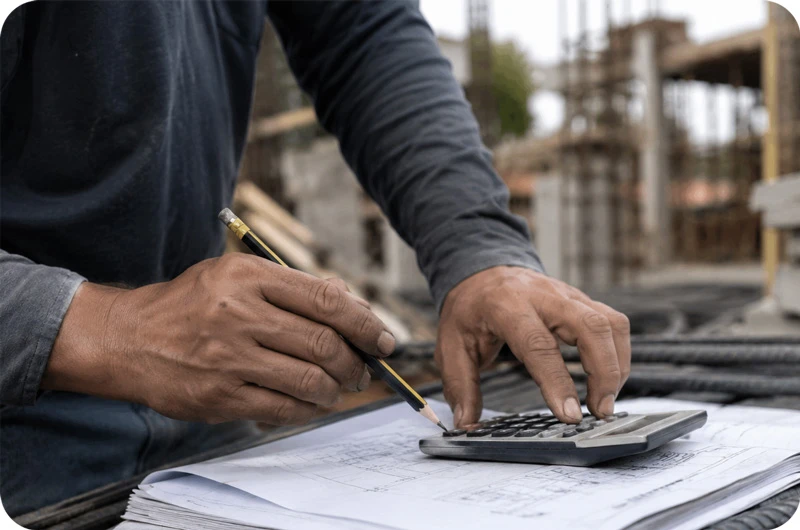

Even if you’re using a contractor, it doesn’t hurt to calculate your own building material costs. To avoid overspending when building or renovating, it helps to know exactly what materials you’ll need. Before heading to the building supply store, it’s worth considering the types of materials you’ll use and weighing your budget against current building material prices — referencing 2018–2019 material price lists as a benchmark. Also pay attention to how to calculate building materials per square meter, to avoid running short or over budget mid-project. Here’s how to calculate building materials.
1. Know the Types of Building Materials and Their Uses
There are many types of building materials used in home construction. Check the list below and determine which ones you’ll need.
- Foundation stone. Needed to build the building’s foundation. You can use river stone, mountain stone, or brick.
- Cement. Cement plays a crucial role throughout construction — from bonding the foundation stone, to joining bricks for walls, to plastering walls, to creating exposed cement flooring.
- Sand. Combined with cement and water, sand forms the mixture used to bond stone and brick, forming sturdy walls and columns.
- Steel. Used as reinforcement to strengthen walls.
- Wood and bamboo. Wood is used for construction as well as flooring, walls, frames, and stairs. Bamboo is also used throughout the construction process.
- Gravel / crushed stone (split). Typically mixed with cement and sand to make concrete.
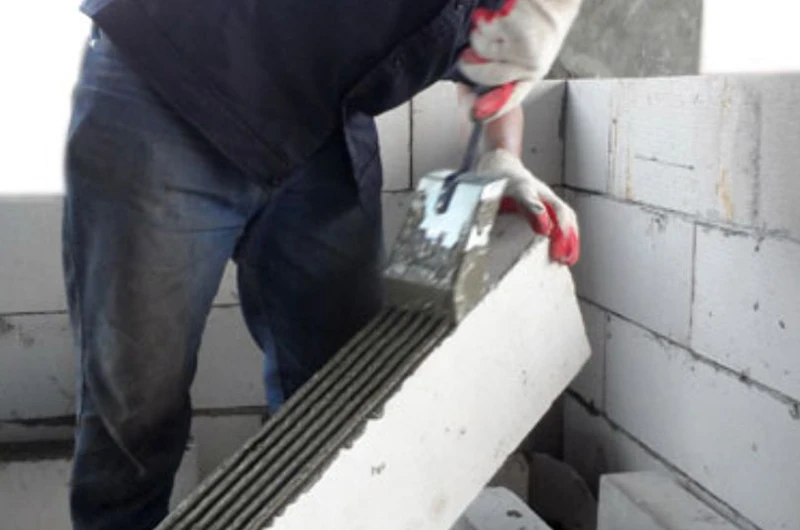
- Clay brick / concrete block / AAC block. Brick is an inseparable part of construction. Its cool, sturdy nature makes it a popular choice. To save cost, brick is often replaced with concrete block, which is more affordable but not as strong and tends to retain more heat. AAC block (“hebel”) has become increasingly popular with consumers.
- Roof tiles. Clay roof tiles are arguably the most popular option in Indonesia. Alternatives include lightweight asbestos and metal roofing, though these conduct heat faster into the home. There are also roof tiles made from plastic, recycled rubber, and cellulose fiber, which are more eco-friendly and relatively safer during earthquakes. Other options include asphalt shingles, ceramic roof tiles, and wood shakes.
- Ceramic tile. Flooring, bathroom walls, and kitchens all require different types of tile. Beyond material, today’s designs also come in a much wider variety.
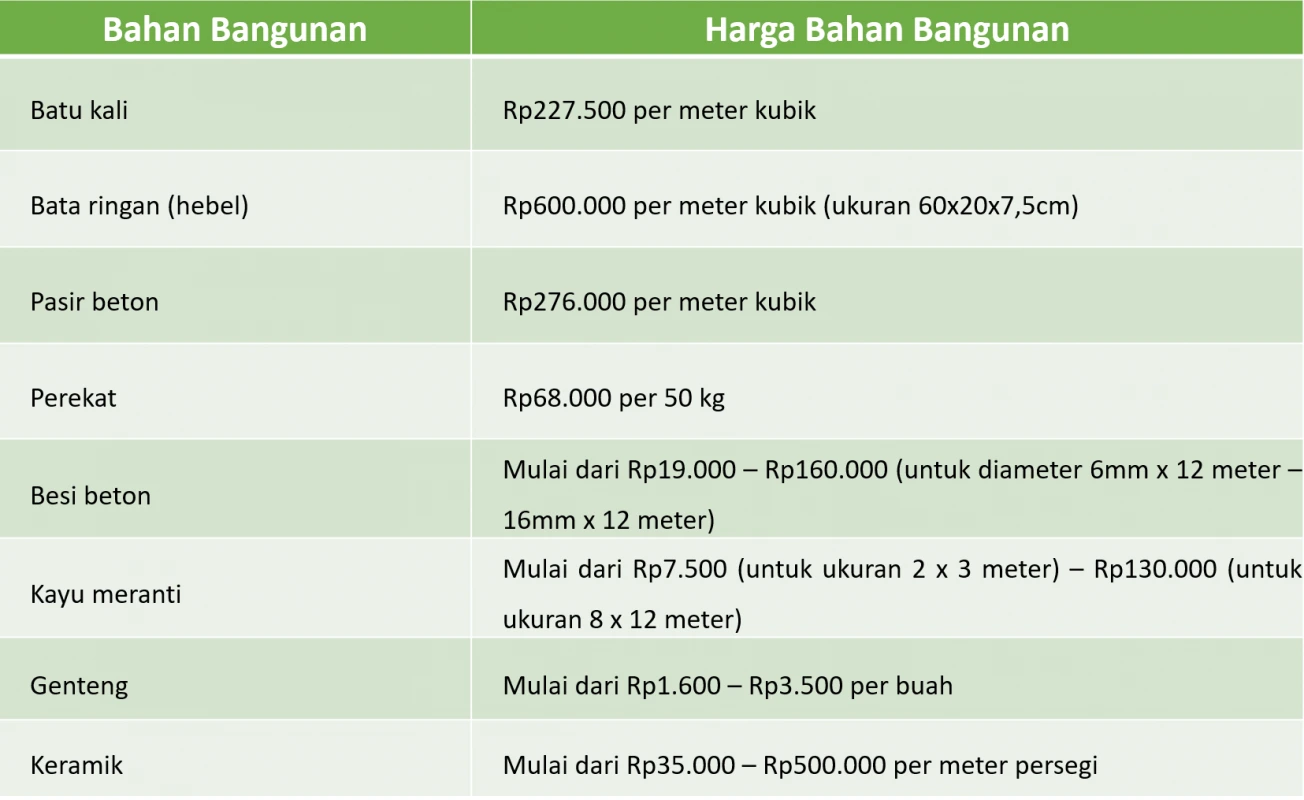
2. Know Building Material Prices
Quality building materials result in a sturdier, more durable structure. Think of it as an investment in your future — it requires a larger upfront cost, but saves you money down the road on maintenance and durability.
Calculate the Area to Be Built and the Materials Needed
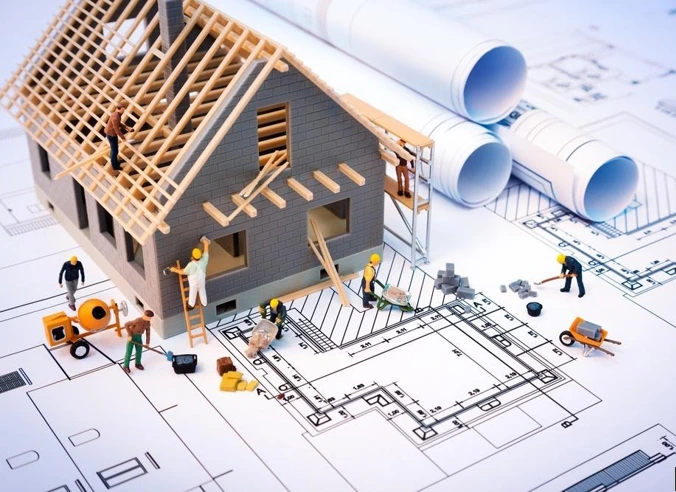
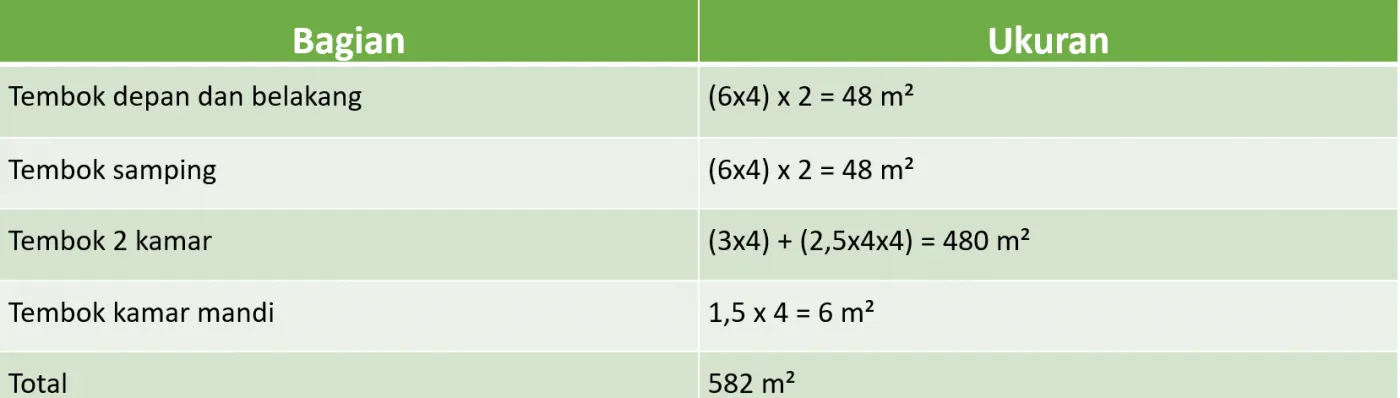
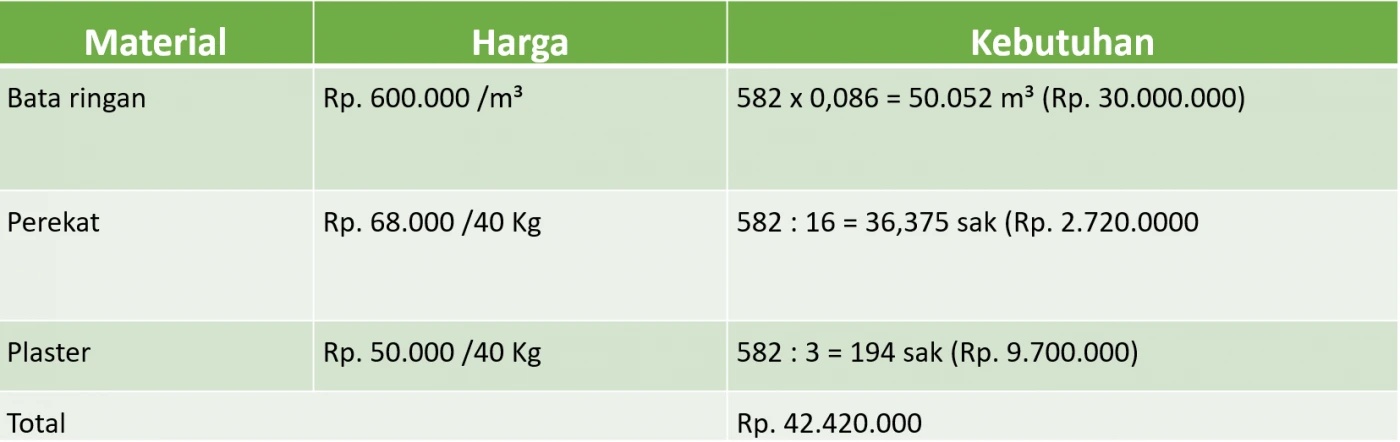
The first step is to calculate the area to be built, then multiply that by the amount of material required.
Example: a Type 36 house
Calculate Labor Costs (Construction Workers)

If you’re preparing to build a house, you’ve probably wondered how much you’ll need to pay your construction workers. Worker wages are typically structured in two ways: daily wages or contract (borongan) wages. Under the daily wage system, each worker is paid at the end of each working day. Under the contract system, an agreement is reached in advance for a total wage covering the full number of working days — or it can be calculated based on the prevailing per-square-meter labor rate in a given area.
Beyond how to calculate building materials, choosing between contract and daily wages is really just a matter of agreement between you and your chosen workers — both systems work similarly, though a contract system may make managing your workforce easier.
Factors That Affect Construction Labor Costs:
- Construction location. Rates vary by region — city versus rural areas will differ.
- Complexity of the build. More complex designs take more time to build. Different designs mean different scopes and levels of difficulty.
- Type of work involved. The number of work items depends on the design. Each work item is priced differently — more high-cost items mean a higher total price.
- Skill level of the workers. Skill level affects speed and quality of work, which in turn affects the total number of days and daily wage costs (if using the daily wage system).
Here is a reference for construction worker wages per square meter:
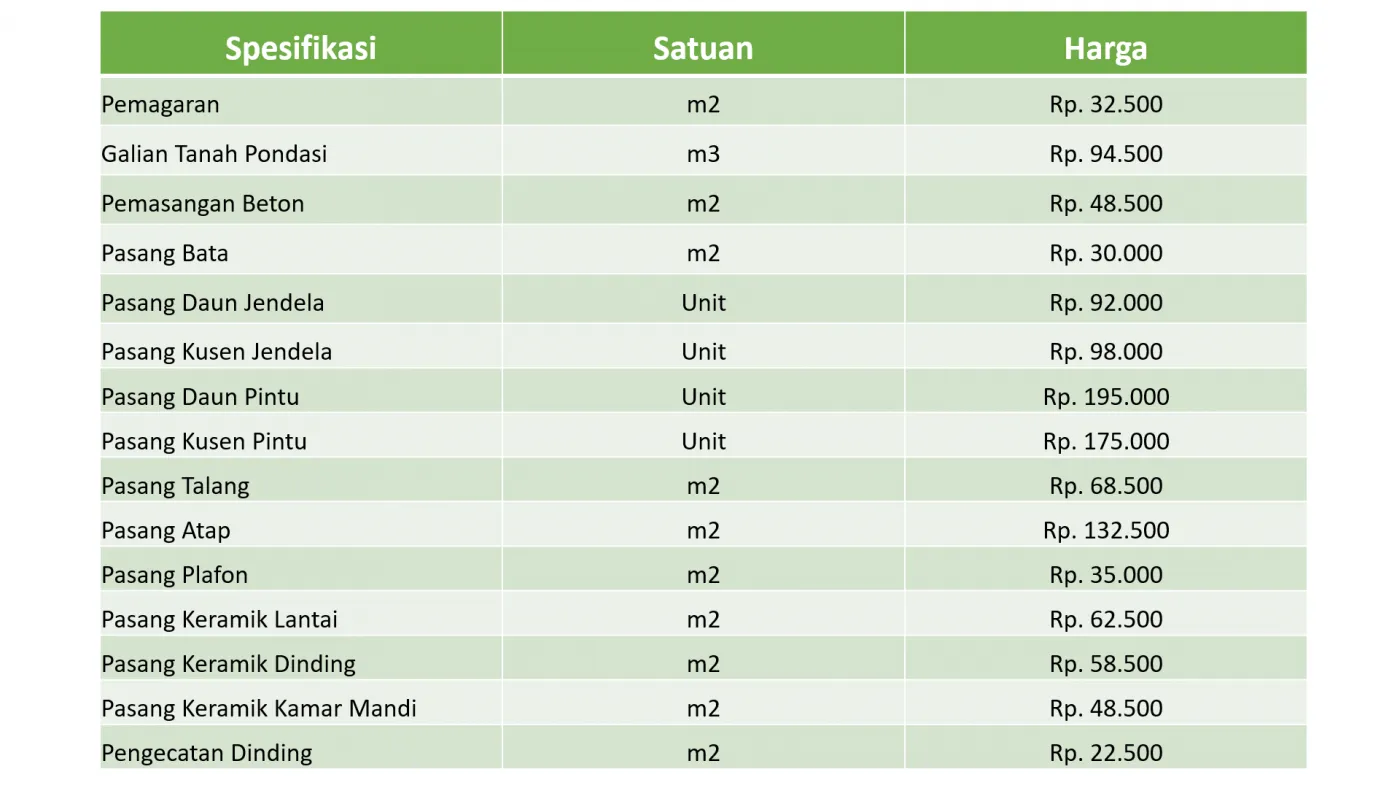
Example calculation using contract wages per m²:
The labor cost is calculated based on the total square meter area of a building. For example, if the labor cost is IDR 800,000/m² for a residential building.
The simple formula is: BBU = HB × LB
BBU (Biaya Upah Borongan) = Total Contract Labor Cost
HB (Harga Borongan) = Contract Labor Rate
LB (Luas Bangunan) = Building Area
Example:
- House area = 6m x 6m = 36 m²
- Contract labor rate per m² = Rp. 800,000
- Contract labor cost (BUB) = 36 m² x Rp. 800,000 = Rp. 28,800,000
This typically covers foundation work, brick wall installation and plastering, roof framing and covering, finishing work, and all other agreed-upon work items.
With this overview of how to calculate building materials, we hope you’ll be better equipped to choose the right materials for your build and negotiate favorable labor rates with your construction workers.